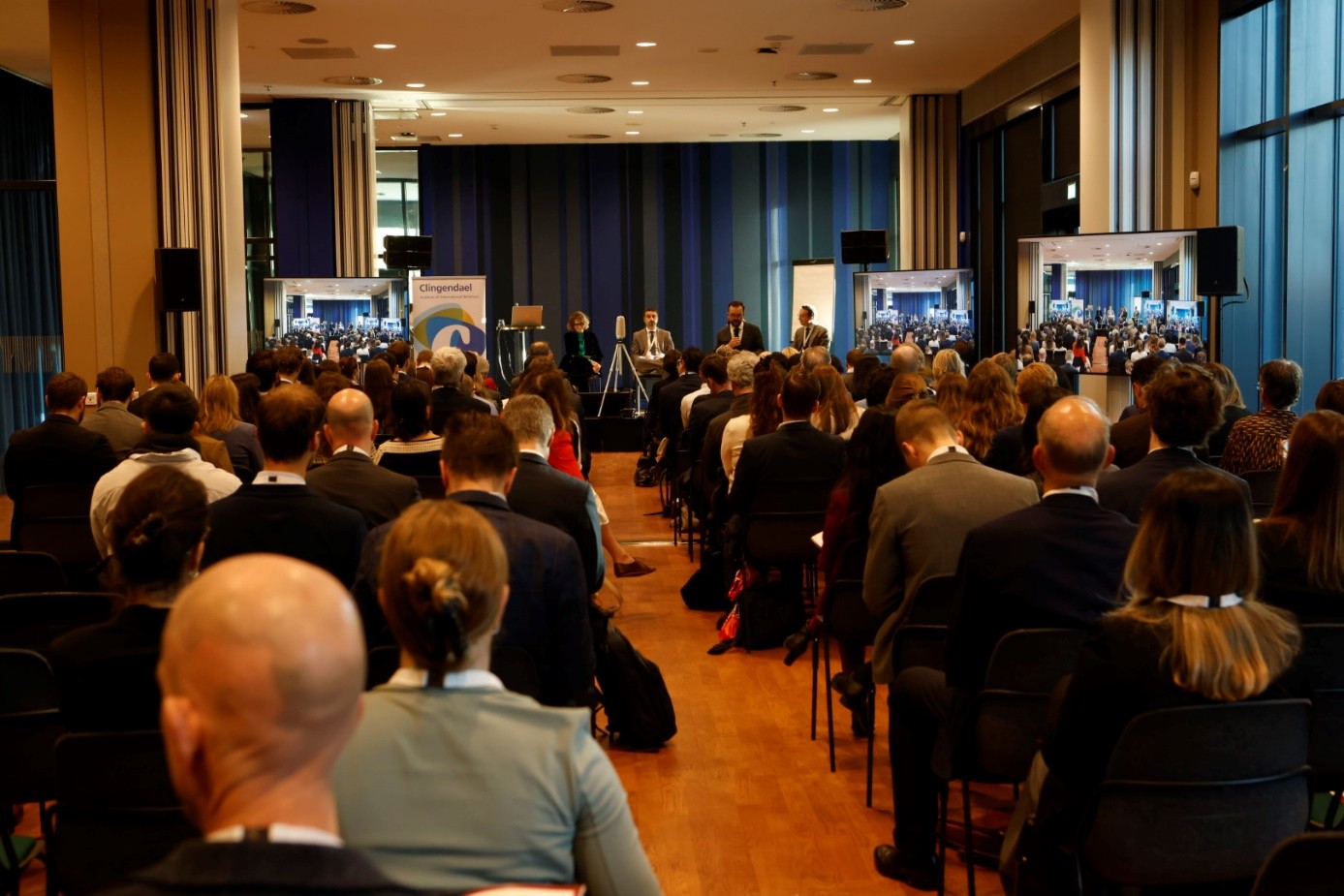
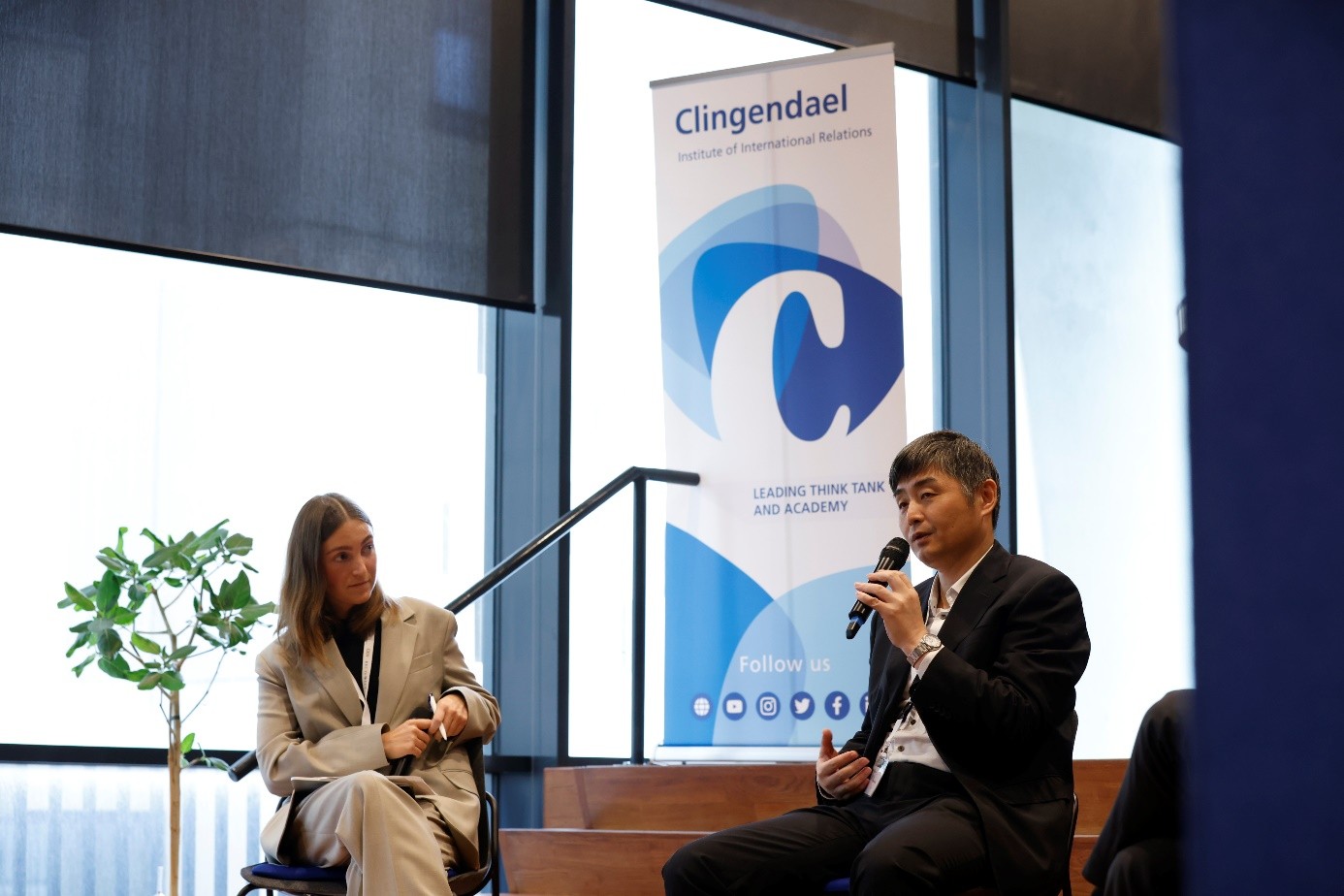
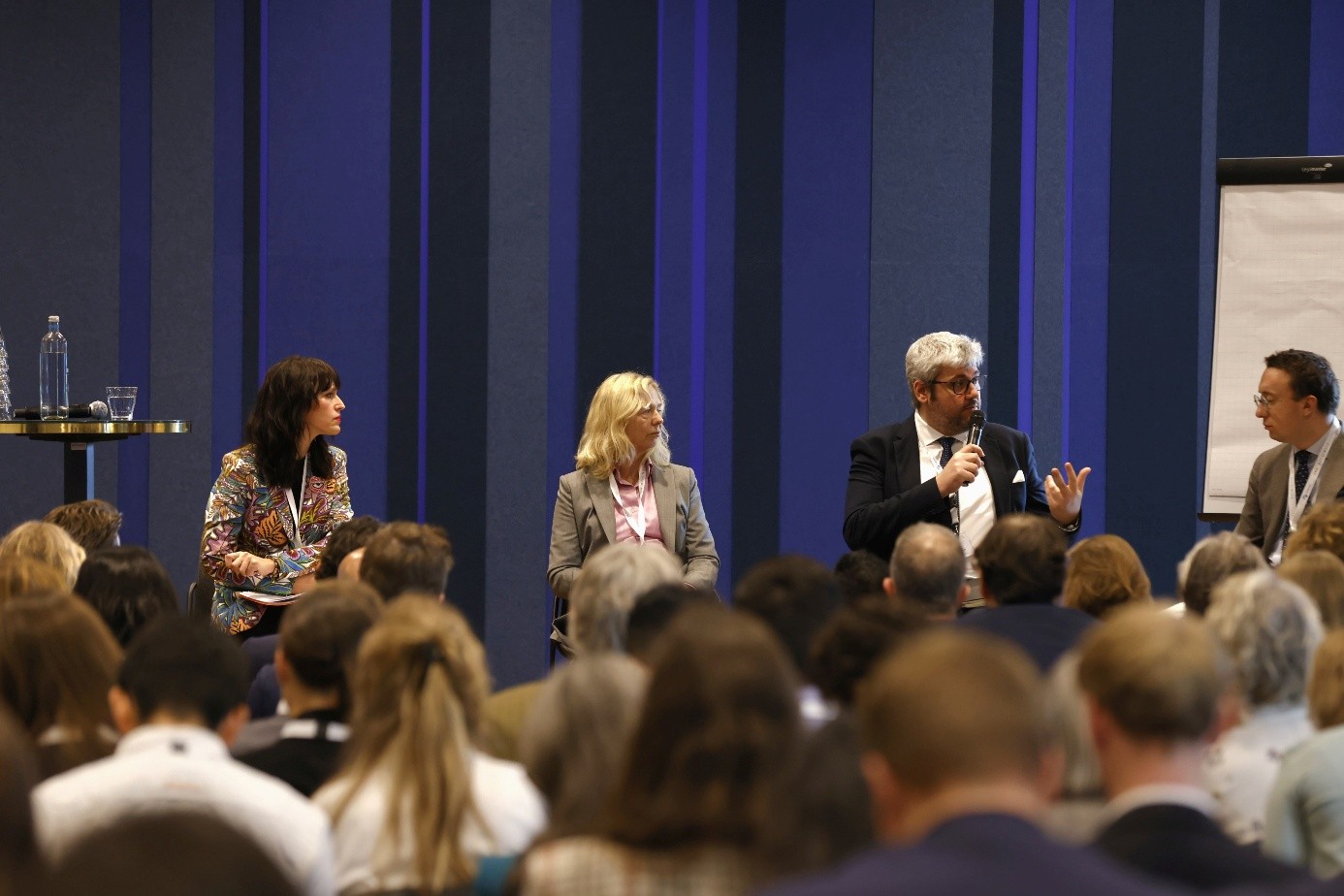
The next round of the Europe-China Table took place on 15 April to discuss the changing dynamics in state-society relations in the People’s Republic of China.
Summary
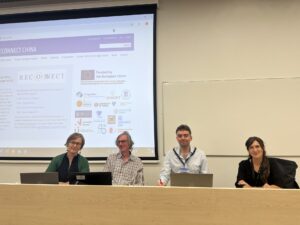
Organised by Reconnect China partner IAI – Istituto Affari Internazionali, the online event focused on recent developments in social governance and examine how these, in turn, shape, and are shaped by, state–society relations.
The roundtable discussion used two analytical entry points presented in two keynote speeches: Beatrice Gallelli (IAI & Ca’ Foscari) presented her research on China’s ecological civilisation discourse, explaining its historical origins and evolution in the Chinese political context. The presentation focused on how state-society relations are represented in official discourse regarding ecological civilisation.
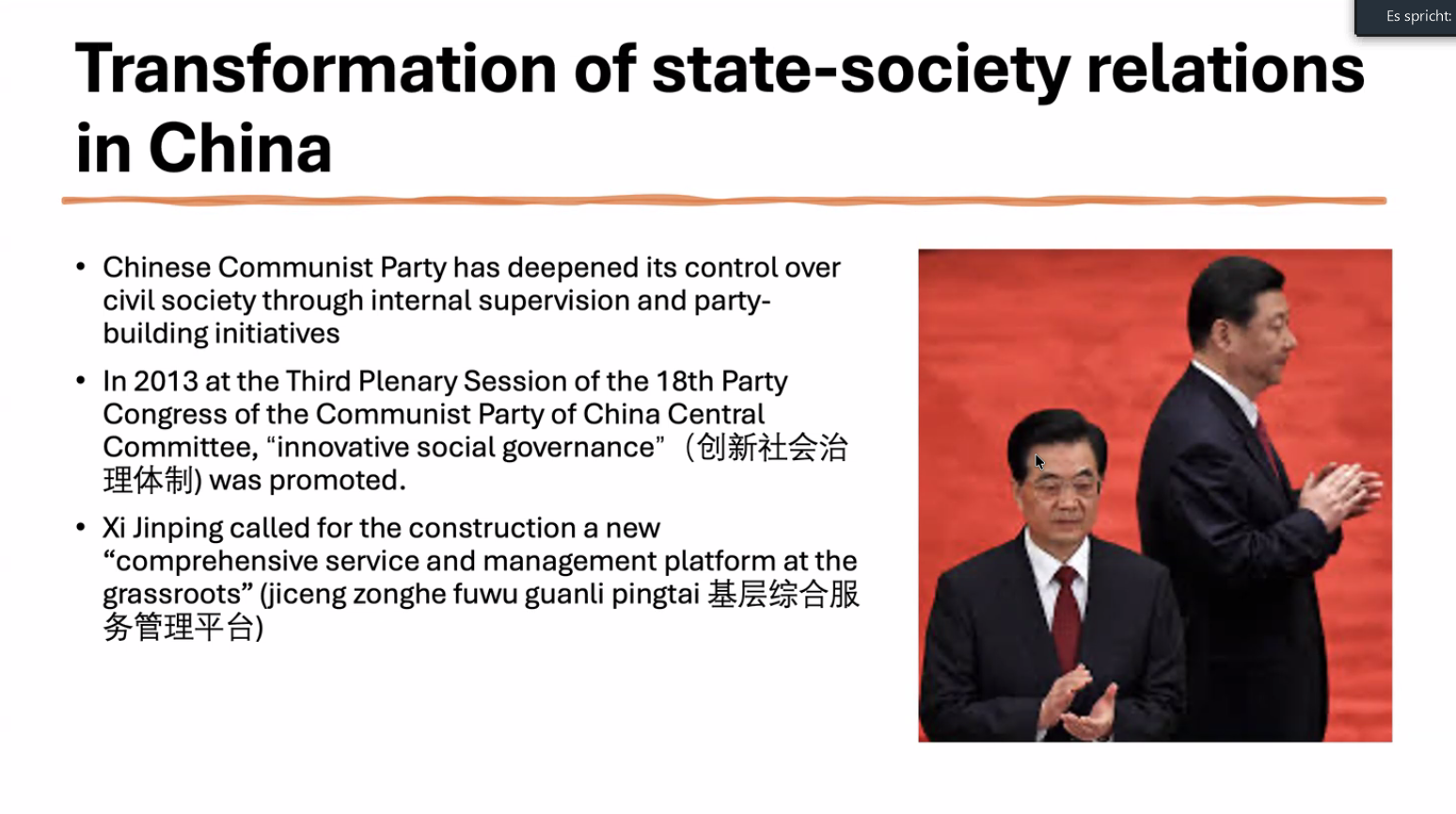
Runya Qiaoan (Palacky University Olomouc & University of Vienna) presented research on social governance in China, focusing on how non-governmental organizations (NGOs) participate in the grid management system. The study highlights an asymmetrical power relationship between NGOs and grid managers, but also noted that some NGOs with substantial cultural, social, or political capital can reverse power dynamics and function as platform users rather than mere components of the system.
Under the professional moderation of Anna Lisa Ahlers (Max Planck Institute) a lively debate engaged on how these two domains can shape the evolving relationship between the state and society.
By situating these practices within their broader political and institutional context, the roundtable aimed to contribute to a balanced understanding of Chinese governance and its international implications.
Discussion Points and Takeaways
The discussion evolved around three themes: 1) how the State under President Xi Jinping envisions State-society relations; 2) How Chinese society reacts to the State’s initiatives; 3) The implications for the EU.
The discussion increasingly focused on the implications of promoting these slogans abroad for the EU. The debate thus centred on the recommendation not to reverberate Chinese slogans, while suggesting the development of an alternative language and concept to represent human-nature relationships.
The debate critically looked at the role of the Chinese Communist Party in grid management, explaining how Party cells are embedded in various organisations, including private companies and NGOs. Runya Qiaoan described how NGOs must align their work with Party priorities, and the rules they have to abide by. She acknowledged some paradoxes in the system, including instances where grid managers might fabricate reports or create minor issues to meet work requirements.
The roundtable discussion also focused on AI governance and national innovation systems in China, with participants examining how domestic actors are becoming more interconnected while international actors are becoming more distant. The conversation also touched on China’s dual positioning as a developing country while leading in green technology, with Beatrice Gallelli explaining the deeper meaning attached to the “developing country” status in Chinese official narrative, which conjoins the distinction between developing status and technological leadership.
The discussion brought the following takeaways:
- Avoid mimicry and develop autonomous narratives: A critical recommendation for the EU is to refrain from adopting or repeating Chinese political slogans in bilateral or multilateral forums. Doing so can inadvertently validate the CCP’s governance model. At the same time, the EU should invest in and promote its own conceptual framework and strategic narratives, especially regarding human-nature relationships.
- Recognise the “developing leader” paradox: China has maintained its “developing country” status, although it leads in green technology. The EU must reconcile this duality in trade and climate negotiations, recognising that for Beijing, the “developing” status is a permanent political identity rather than a temporary economic stage.
- Understand how the Chinese State manages society: this is vital for EU entities (NGOs, businesses and academic institutions) operating on the ground.
- Learn from the changing innovation landscape: in the innovation system, domestic Chinese actors are becoming more interconnected, also in response to international circumstances. This should also lead the EU to learn from China’s best practices in this field.
You can find more information on our website about the series of the Reconnect China roundtables.