Research from ReConnect China at the EU-SPRI and ENTRANCE conferences in Germany

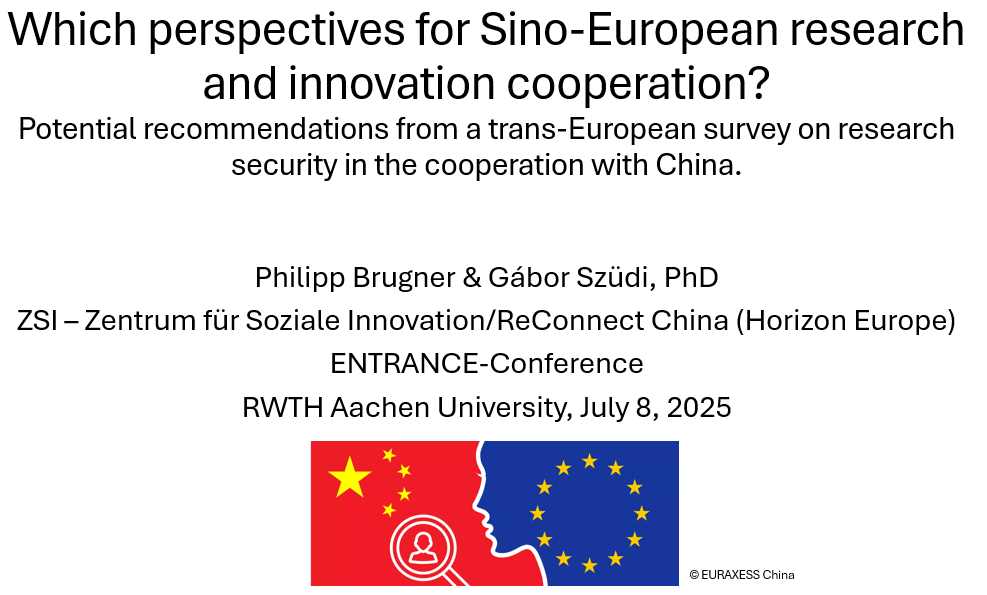
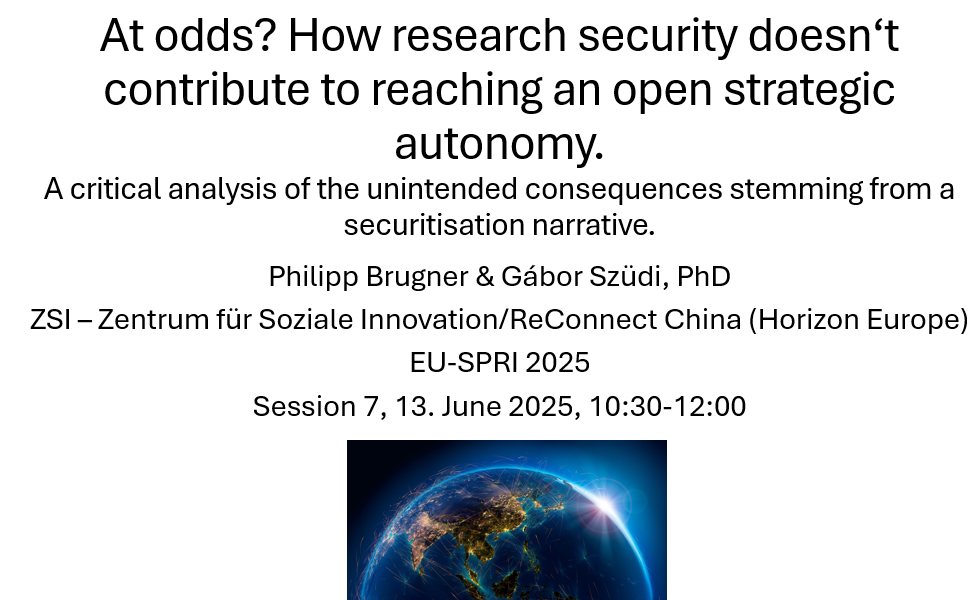
Research results from our work area on EU-China cooperation in science, technology and innovation were presented in two conferences in Germany before the summer. Philipp Brugner from our partner ZSI delivered these presentations, drawing on the work done with his colleague Gábor Szüdi in their trans-European survey on research security in the cooperation with China, which was implemented on behalf of the ReConnect China project between May 2024 and January 2025.

At the EU-SPRI annual conference 2025 at the Technical University Dortmund (11-13 June 2025), Philipp took part in the session titled “From (in)dependence towards resilience: tensions and synergies between open strategic autonomy and transformative research and innovation policies” and presented the survey findings in the light of the EU’s open strategic autonomy discussions.

Only a few days later, at the ENTRANCE conference “Lessons Learned: Navigating Experiences from Sino-European Cooperation for Future Global Engagements” (7-8 July 2025), Philipp participated in the concluding panel discussion and gave an outlook on potential recommendations for future EU-China cooperation in R&I derived from the policy brief written by ZSI.

The consolidated findings of ZSI’s research will be published in the forthcoming Routledge International Handbook of Research Security (2026). A first glimpse into the handbook’s content is available through Routledge.

(featured image von Alexandre Pellaes auf Unsplash)
 

ReConnect China Roundtable at the 25th Biennial Conference of the European Association for Chinese Studies

Key achievements of ReConnect China research at Europe’s main scientific conference on China

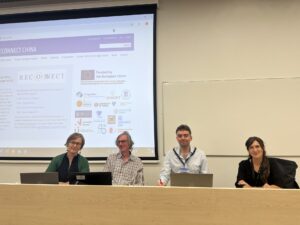
From 27 to 30 August 2024, the ‘European Association for Chinese Studies’ held its 25th Biennial Conference in Tallinn, Estonia. Our project was present with a roundtable discussing the key research outputs of the project realised so far.

Outi Luova (University of Tartu), Jasper Roctus (UGent/Egmont), Bart Dessein (UGent/Egmont), and Beatrice Gallelli (University Ca’Foscari/Istito Affari Internationali) took part in the roundtable on behalf of ReConnect China. Beatrice Gallelli also moderated the roundtable. With an audience of academics and think tankers in the field of China studies, discussions developed based on the policy briefs that are the main outcome of the research done within our consortium. In particular, with some of the authors of the policy briefs and members of Work Package 6 (Measures to Maximise Impact) being present, the discussions developed on issues related to the Chinese economy, China’s international relations, China’s domestic policies, research and development, scientific cooperation, and outreach to civil society with emphasis on European youth.

While for the last topic, the ‘ReConnect China’ consortium has developed MOOCs on Chinese Politics and Society, EU-China Relations, the Chinese Economy, and Chinese Popular Culture, the panelists, in their statements, especially drew on the policy briefs ‘Knowledge and Perception of Research Security’ and ‘Policy Recommendations on EU-China STI Cooperation in the big Data-related Scientific Fields’ (ZSI), ‘Geopolitical Narratives Are Counterproductive’ (Elcano and IAI), ‘Navigating EU-China Investment Dynamics: Safeguarding Technological Know-How while fostering Cooperation’ (IAI), and ‘‘Remonstrating’ or the Art of Forging Relations’ (Egmont).

from left to right: Outi Louva, Bart Dessein, Jasper Roctus, Beatrice Gallelli

Science Diplomacy Collaboration with China – ReConnectChina represented at COST Workshop

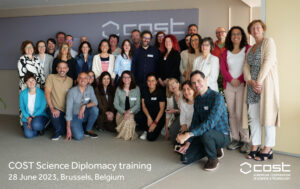
In the framework of a science diplomacy workshop organised by the COST Association for new COST (European Cooperation in Science and Technology) Actions on 28 June 2023, ZSI researcher Gábor Szüdi had the chance to present the co-operation risks and potentials with China (as an example of a ‘non-like-minded country’) within collaborative R&I projects, using the tools of science diplomacy.
The presentation highlighted the differences between the EU and Chinese interpretation of STI co-operation and science diplomacy, drawing also on national examples, explaining the inherent tensions that might be successfully mitigated by the ongoing work in ReConnectChina.
The workshop therefore served also as an excellent opportunity to introduce high-level researchers from all around Europe (principal investigators of COST Actions in manifold thematic areas) the thematic foci and strategic priorities of ReConnect China.